
How Schools Can Reduce Counselor Overload (Without Hiring More Staff)
Updated: May 14
Across the country, school counselors are supporting more students than ever before.

In many schools, counselor-to-student ratios exceed recommended levels, making it difficult to provide consistent, individualized support for every student.
In some cases, the challenge goes beyond caseload. With reduced budgets and limited staffing, college and career advising is often spread across multiple roles, including teachers, administrators, or other staff members who are already carrying full responsibilities of their own. In practice, that means students may rely on well-intentioned support from people who were never meant to shoulder advising alone.
For school leaders, the question is no longer whether this is a problem.
It’s:
How can we scale advising support without increasing staff headcount?
What Causes Counselor Overload?
Counselor caseload challenges are not just about staffing. They are often driven by structural limitations in how advising is delivered.
Common Drivers of Counselor Overload
High student-to-counselor ratios
Administrative and scheduling responsibilities consuming time
Lack of standardized advising systems
Limited access to tools that support scalable student engagement
Advising responsibilities spread across staff who are not dedicated college and career counselors
High-touch processes that require repeated follow-up with families, such as FAFSA completion, consent forms, and milestone-related communications
In many schools, overload is not just about the number of students assigned to each counselor. It also comes from the amount of manual follow-up required to move students and families through key advising milestones, as well as the reality that advising is sometimes carried by staff members who are not dedicated counselors. When advising depends heavily on one-on-one interactions, repeated outreach, and parent response, it becomes difficult to scale support consistently across the full student population.
Why Traditional Approaches Don’t Scale
Many schools attempt to address counselor overload by:
Hiring additional staff
Adding workshops or group sessions
Increasing administrative support
While helpful, these approaches often:
Do not reach every student consistently
Require ongoing budget increases
Fail to create long-term system improvements
These solutions assume that the core issue is just capacity, when the real problem is how advising is structured and delivered.
What Scalable College and Career Advising Looks Like
To effectively support counselors, schools need systems that extend advising beyond one-on-one meetings.
Scalable advising models include:
Structured student pathways for college and career readiness
On-demand access to guidance and resources
Centralized tools for tracking progress and engagement
Data visibility into student needs and milestones for counselors and families
This enables:
Focus on high-impact interactions
Support more students without increasing workload
Ensure consistency across the entire student population
What to Look for in Tools That Support Counselors with Large Caseloads
When evaluating solutions, it’s important to go beyond basic digital tools and focus on systems that enable scale. Basic tools may digitize parts of advising, but they still rely heavily on counselor time to function. Systems designed for scale reduce that dependency by enabling students to progress independently and consistently.
1. Student and Family Self-Service Capabilities
Students and, where relevant, families should be able to:
Explore career pathways independently
Access college planning resources
Complete key milestones without requiring constant counselor intervention
Access self-guided support for family-dependent processes, such as FAFSA completion or consent-based milestones
This reduces bottlenecks and increases student ownership, but it also helps schools reduce the time staff spend manually following up with families on key processes. In strong implementations, schools can also see whether students and families are actually engaging with the tool, making it easier to identify where additional support is needed.
2. Structured Advising Frameworks
Look for platforms that provide:
Guided pathways for students
Clear progression through advising milestones
Built-in scaffolding for decision-making
This ensures consistency across all students
3. Integrated Career Exploration Tools
Effective platforms include:
Interest and aptitude assessments
Career pathway mapping
Exposure to real-world opportunities
This supports both engagement and informed decision-making
4. Data and Progress Tracking
Schools and families should have visibility into:
Student progress
Engagement levels
Completion of key milestones
This allows counselors to prioritize where support is needed most
5. Automation and AI-Supported Guidance
Modern platforms increasingly provide:
Personalized recommendations
Automated nudges and reminders
Scalable guidance based on student input
This extends the reach of counselors without increasing workload.
How Schools Can Start Improving Counselor Capacity Today
Even without a full system overhaul, schools can begin to shift toward more scalable advising models.
Immediate steps include:
Standardizing key advising milestones across grade levels
Providing students with centralized access to resources
Reducing administrative burden on counselors where possible
Exploring tools that support structured, scalable advising
The Opportunity for Schools
Schools that rethink advising systems are able to:
Support more students effectively
Improve college and career readiness outcomes
Reduce burnout among counseling staff
Create more equitable access to guidance
It’s important to note that the goal here is not to replace counselors. The opportunity schools should lean into is working to extend counselor impact.
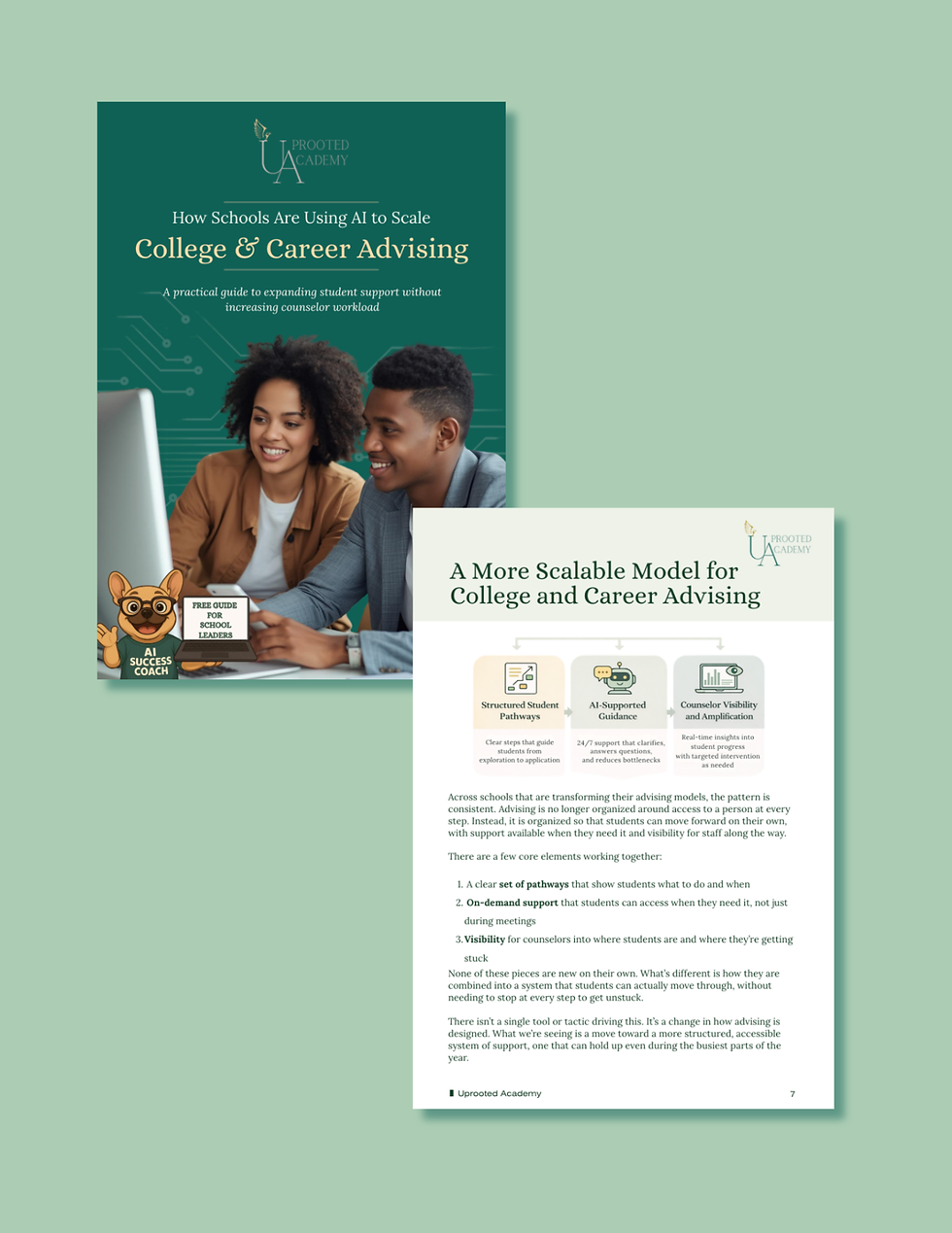
Want to Reduce Counselor Overload Without Expanding Staff?
Download our free guide, How Schools Are Using AI to Scale College & Career Advising, to:
Identify where advising bottlenecks are slowing students down
Understand how AI can support students without replacing counselors
Explore a more scalable model for college and career advising


Comments